
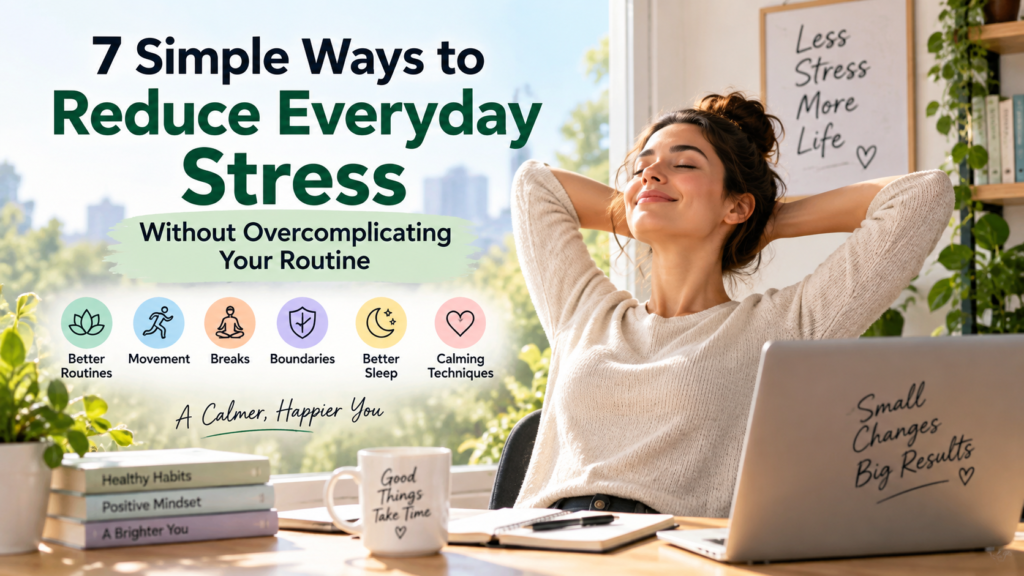
Stress is a normal part of everyday life.
Work deadlines, family responsibilities, financial concerns, constant notifications, travel, unexpected problems, and simply having too much to do can all create pressure.
Some stress can even be useful. It can help you focus, respond to challenges, and finish important tasks.
The problem begins when stress becomes constant and you rarely feel like you have time to recover.
Reducing stress does not always require a major lifestyle change, expensive retreat, or complicated wellness routine.
Often, small changes in how you organize your day, take breaks, move your body, and respond to pressure can make everyday life feel more manageable.
Here are seven simple ways to reduce everyday stress without overcomplicating your routine.
1. Start the Day With a Simple Plan
Stress can increase when everything feels equally urgent.
You may begin the day thinking about emails, appointments, errands, unfinished work, household tasks, and dozens of other responsibilities at once.
A simple daily plan can create structure.
Instead of trying to remember everything, write down the most important things you need to complete.
Try choosing three main priorities.
These should be tasks that would make the day feel productive even if you do not finish everything else.
You can still keep a longer list, but separating important tasks from optional ones can make your workload feel more manageable.
Avoid filling every minute of your schedule.
Unexpected things happen, and a completely packed calendar leaves no room for delays or changes.
A realistic plan should include some flexibility.
It can also help to look at your calendar before starting work rather than discovering meetings or deadlines at the last minute.
Planning does not remove every stressful situation.
It simply gives your day a little more direction and reduces the mental effort of constantly deciding what to do next.
2. Take Short Breaks Before You Feel Exhausted
Many people wait until they are completely tired before taking a break.
By that point, concentration may already be poor and simple tasks can feel much harder than they normally would.
Short breaks throughout the day can help interrupt long periods of intense focus or frustration.
A break does not need to be long.
You might stand up, walk around for a few minutes, get some water, stretch, step outside, or simply look away from your screen.
Even a few minutes can create a mental transition before returning to work.
Try not to turn every break into more screen time.
Scrolling through social media or reading more messages may feel like a break, but it can continue feeding your brain new information.
Sometimes a quieter break is more refreshing.
If you tend to forget, connect breaks with something you already do.
For example, take a short walk after lunch, stand up after completing a major task, or stretch between meetings.
Regular breaks can make a demanding day feel less continuous and overwhelming.
3. Move Your Body Regularly
Physical activity can be a useful way to release tension and create a change of focus.
You do not need to complete an intense workout every day.
Walking, stretching, cycling, dancing, gardening, swimming, or doing a short home workout can all add movement to your routine.
If most of your day is spent sitting, even a short walk can provide a useful break.
Movement can also give you time away from screens, emails, and constant information.
Some people find that walking helps them think more clearly about a problem.
Others prefer exercise specifically because it gives them a period when they are not thinking about work at all.
Choose activities you actually enjoy.
If you dislike running, you do not need to force yourself to become a runner.
The best type of movement is often the one you are willing to repeat consistently.
Start small if necessary.
A ten-minute walk is still movement.
Building a habit gradually can be easier than creating a demanding routine that becomes another source of stress.
4. Reduce Unnecessary Notifications
Phones and computers make it easy for other people and apps to demand your attention throughout the day.
Emails arrive.
Messages appear.
News alerts flash across the screen.
Apps send reminders about things that are not actually important.
Each notification may only take a few seconds, but constant interruptions can make it difficult to focus.
Consider reviewing your notification settings.
Keep alerts for things that genuinely require timely attention.
Turn off promotional notifications, unnecessary social media alerts, game notifications, and other messages that do not need an immediate response.
You can also create periods when you intentionally avoid checking email or messages.
For example, instead of opening your inbox every few minutes, you might check it at several planned times during the day.
This is not possible for every job, but even small changes can reduce unnecessary interruptions.
You do not need to be available to every app every minute.
Creating a little distance from notifications can make your day feel calmer and help you focus on one thing at a time.
5. Set Better Boundaries Around Your Time
Stress often grows when people feel they must say yes to everything.
Extra tasks, social commitments, work requests, favors, and responsibilities can gradually fill every available part of the day.
Learning to set boundaries does not mean becoming unhelpful.
It means being realistic about your time and energy.
Before agreeing to something, consider whether you actually have enough time to do it properly.
If not, it may be better to decline, suggest another time, or explain what you can reasonably manage.
Work boundaries can be especially important.
If possible, create a clear point when the workday ends.
Constantly checking emails late at night can make it difficult to mentally separate work from personal time.
You can also create boundaries around social media, news, and other sources of information.
Being informed can be useful, but repeatedly checking upsetting or stressful content throughout the day may increase tension without helping you solve anything.
Protecting some parts of your day from unnecessary demands can create more room for rest, relationships, hobbies, and other activities that matter to you.
6. Create a Calmer Evening Routine
The end of the day can influence how you feel the next morning.
If your evenings are filled with unfinished work, constant notifications, heavy screen use, and last-minute tasks, it may be difficult to relax before bed.
A simple evening routine can help create a transition between the active part of the day and rest.
You do not need an elaborate routine.
You might lower the lights, prepare things for the next morning, take a shower, read, listen to music, stretch, or spend some quiet time away from work.
Preparing for tomorrow can also reduce morning stress.
You could set out clothes, pack a bag, write down tomorrow’s priorities, or prepare part of breakfast.
The goal is to remove a few small decisions from the next day.
Try to keep your sleep schedule reasonably consistent when possible.
Sleep needs vary from person to person, but poor sleep can make everyday problems feel harder to manage.
A calmer evening will not eliminate stress, but it can make it easier to recover from a demanding day.
7. Focus on What You Can Actually Control
Some stressful situations cannot be solved immediately.
You may be waiting for a decision, dealing with uncertainty, worrying about something in the future, or facing a problem that depends partly on other people.
In these situations, repeatedly thinking about every possible outcome can increase stress without improving the situation.
Try separating what you can control from what you cannot.
You may not control the final decision, but you can control how well you prepare.
You may not control traffic, but you can leave earlier.
You may not control another person’s reaction, but you can control how clearly and respectfully you communicate.
You may not know exactly what will happen next month, but you can take useful steps today.
This does not mean ignoring real problems.
It means directing your attention toward actions that are actually available to you.
When you notice yourself repeatedly worrying about the same situation, ask:
Is there something useful I can do about this right now?
If the answer is yes, identify the next small action.
If the answer is no, give yourself permission to return to it later rather than mentally solving the same problem again and again.
Simple Breathing Can Help During Stressful Moments
Sometimes stress appears suddenly.
You receive an unexpected message, a meeting goes badly, something breaks, or several problems happen at once.
In those moments, a simple pause can help before you react.
Try slowing your breathing for a minute.
You do not need a complicated technique.
Breathe comfortably, allow your shoulders to relax, and give yourself a moment before responding.
The purpose is not to magically eliminate stress.
It is to create a small gap between the stressful event and your reaction.
That gap can help you avoid sending an angry message, making a rushed decision, or assuming the worst before you have enough information.
You can also step away briefly when appropriate.
A short walk, a glass of water, or a few minutes in another room may help you return to the situation with a clearer perspective.
Avoid Trying to Fix Everything at Once
When people feel stressed, they sometimes respond by creating an entirely new lifestyle plan.
They decide they will wake up earlier, exercise every day, stop using social media, meditate, reorganize their home, improve their diet, and completely change their schedule.
That plan can quickly become another source of pressure.
Choose one or two changes first.
You might begin by taking a short walk each afternoon and turning off unnecessary phone notifications.
Once those habits feel normal, you can add something else.
Small changes are easier to evaluate.
You can see whether they actually help before investing more time and effort.
Stress management should make life more manageable, not create another list of rules you feel guilty about breaking.
Make Time for Things You Enjoy
A busy schedule can gradually push enjoyable activities aside.
Work and responsibilities begin to occupy nearly every part of the day.
However, hobbies, social connections, entertainment, and relaxation are not necessarily wasted time.
They can provide a break from constant responsibilities.
This might mean reading, cooking, watching sports, playing a game, spending time outdoors, listening to music, meeting friends, or working on a hobby.
The activity does not need to be productive.
In fact, constantly trying to turn every hobby into a goal or side business can remove some of the enjoyment.
Give yourself permission to do some things simply because you like them.
Even a short period spent doing something enjoyable can make a demanding week feel more balanced.
Pay Attention to Your Stress Patterns
Stress becomes easier to manage when you understand what regularly triggers it.
For a week or two, notice when you feel particularly overwhelmed.
Is it usually in the morning?
After checking email?
Before certain meetings?
When you have not eaten?
When you sleep poorly?
When your schedule becomes too crowded?
Patterns can reveal practical changes.
If mornings are chaotic, preparing the night before may help.
If constant notifications are distracting, changing phone settings may help.
If certain tasks repeatedly create anxiety because you delay them, scheduling them earlier may reduce pressure.
You do not need to track every emotion.
Simply becoming more aware of recurring situations can help you understand where small changes might have the biggest effect.
Know When Extra Support May Help
Everyday stress is common, but sometimes stress becomes difficult to manage on your own.
If you feel overwhelmed for a long period, stress significantly interferes with sleep or daily life, or you are struggling to cope, consider speaking with a qualified healthcare or mental health professional.
Getting support does not mean you have failed to manage stress correctly.
Some situations require more than lifestyle changes.
Professional support can provide additional strategies based on your circumstances.
Final Thoughts
Reducing everyday stress does not require creating a perfect life.
Stressful situations will still happen.
Deadlines will appear, plans will change, people will disagree, and some days will simply be more difficult than others.
What you can change is how much unnecessary pressure gets added to those situations.
Start the day with a simple plan.
Take breaks before you are exhausted.
Move regularly.
Reduce unnecessary notifications.
Protect your time.
Create a calmer evening routine.
And focus your energy on the things you can actually influence.
You do not need to adopt all seven habits immediately.
Choose one change that feels realistic and begin there.
Small improvements repeated consistently can make everyday life feel calmer and more manageable.
Related Stories
7 Ways to Make Better Decisions Without Overthinking