
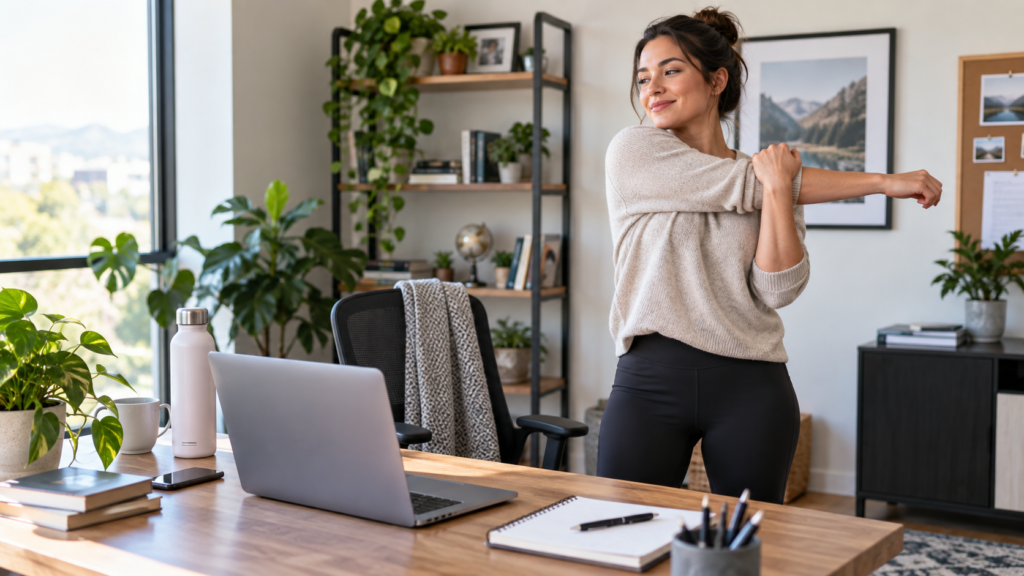
Many people spend a large part of the day sitting.
Office work, studying, commuting, watching television, gaming, and using computers or phones can all lead to long periods with very little movement.
Even people who exercise regularly may still spend many hours sitting between workouts.
The good news is that staying active does not always require a long gym session or an intense exercise program.
Small amounts of movement throughout the day can help make an otherwise sedentary routine more active.
The goal is not to turn every hour into a workout. It is simply to create more opportunities to stand, walk, stretch, and move.
Here are seven simple ways to stay active when you sit most of the day.
1. Take Short Walking Breaks
One of the easiest ways to add more movement to your day is to walk for a few minutes at regular intervals.
You do not need to take a long walk every time.
A short walk around your home, office, building, or neighborhood can break up a long period of sitting.
For example, you might walk for five minutes after finishing a task, during a phone call, before lunch, or after a meeting.
These small walks can add up over the course of the day.
If you work from home, you could walk around the house or step outside for a few minutes.
If you work in an office, you might take the longer route to the restroom, walk to speak with a colleague instead of sending a message, or use part of your lunch break for a short walk.
The most important part is consistency.
A few minutes of movement repeated several times can be easier to maintain than trying to find one large block of time for exercise.
2. Stand Up More Often
Standing is another simple way to reduce the amount of time you spend sitting continuously.
You do not need a standing desk to benefit from standing more often.
You might stand while talking on the phone, reading a document, waiting for food to cook, watching a short video, or having an informal conversation.
If you do have an adjustable desk, you can alternate between sitting and standing instead of standing for the entire day.
Changing positions regularly may also feel more comfortable than staying in the same position for hours.
A useful habit is to connect standing with something you already do.
For example, you might stand whenever you answer a phone call or whenever you check your calendar.
Simple cues like these can make movement more automatic.
The goal is not to avoid sitting completely.
Sitting is a normal part of life. The problem is usually spending very long periods sitting without any movement.
3. Stretch During the Day
Long periods of sitting can leave many people feeling stiff, especially around the neck, shoulders, hips, and lower back.
Gentle stretching can provide a simple movement break.
You could roll your shoulders, gently turn your neck, stretch your arms overhead, stand and reach toward the ceiling, or move your ankles and legs.
Stretching does not need to become a complicated routine.
Even a few simple movements can remind you to change position and move your body.
You might stretch after finishing an hour of work, while waiting for a meeting to begin, or during a short break.
Avoid forcing a stretch or pushing into pain.
Movement should generally feel comfortable and controlled.
If you have an injury or medical condition that affects movement, it may be helpful to ask an appropriate healthcare professional which activities are suitable for you.
For most people, the main goal is simply to avoid staying completely still for long periods.
4. Use Everyday Tasks as Opportunities to Move
Exercise is not the only form of physical activity.
Everyday tasks can also help you move more.
Cleaning, gardening, carrying groceries, taking the stairs, walking to nearby places, washing the car, or playing with children or pets can all add activity to your day.
Look for small opportunities.
If a destination is close enough, consider walking instead of driving.
If you have a choice between stairs and an elevator, you might take the stairs when practical.
When you are cleaning your home, put on music and move at a comfortable pace.
You can also make simple changes to routines.
For example, park slightly farther from the entrance when shopping or make two smaller trips when carrying items around the house instead of trying to move everything at once.
These habits may seem insignificant individually, but repeated regularly they can make your lifestyle more active.
5. Try Short Workouts
Many people assume that a workout needs to last an hour to be worthwhile.
That belief can make exercise feel difficult to fit into a busy schedule.
Short workouts can be much easier to manage.
You might spend ten or fifteen minutes walking briskly, doing bodyweight exercises, cycling, following a simple workout video, or performing another activity you enjoy.
A short session before work, during lunch, or in the evening may feel more realistic than trying to create a large block of free time.
Some people also prefer splitting activity into several smaller sessions.
For example, you might walk for ten minutes in the morning, do a short strength session later, and take another walk after dinner.
The exact activity matters less than finding something you can do consistently.
Choose exercises that match your current fitness level and gradually increase the difficulty if appropriate.
A simple routine that you actually follow is usually more useful than an ambitious program that you quickly abandon.
6. Make Movement Part of Your Work Routine
If most of your sitting happens during work, changing your work habits can make a major difference.
Start by looking at tasks that do not necessarily require you to remain seated.
Phone calls are a good example.
If you do not need to look at a screen, you may be able to walk while talking.
You could also stand during some virtual meetings when appropriate.
Another option is to schedule short movement breaks between focused work sessions.
For example, after working for 45 or 60 minutes, stand up for a few minutes before beginning the next task.
Setting a reminder can help at first.
However, the goal is eventually to make these breaks part of your normal routine so you do not need constant alerts.
You can also place frequently used items slightly farther away.
Keeping a water bottle, printer, or other item across the room creates a small reason to get up periodically.
These changes should not make work inconvenient.
They simply create more chances to move naturally.
7. Choose Activities You Actually Enjoy
It is much easier to stay active when movement does not feel like punishment.
Not everyone enjoys going to the gym, running, or following formal exercise programs.
Fortunately, there are many ways to be active.
Walking, dancing, swimming, cycling, hiking, playing sports, gardening, fitness classes, home workouts, and recreational activities can all involve movement.
Try different activities and pay attention to which ones you genuinely enjoy.
You may prefer exercising alone or with other people.
You might enjoy structured workouts, or you may prefer outdoor activities.
There is no single perfect form of exercise for everyone.
The best option is often one that fits your lifestyle and that you are willing to repeat.
Enjoyment also makes it easier to build consistency.
If you look forward to an evening walk, weekend bike ride, dance class, or game with friends, staying active becomes part of your life rather than another obligation.
Why Breaking Up Sitting Time Matters
It is easy to focus only on formal exercise.
However, the rest of the day matters too.
Someone might complete a workout in the morning and then spend many hours sitting at a desk, in a car, and on a sofa.
Adding movement throughout the day creates a more active overall routine.
This does not mean you need to worry every time you sit down.
Rest is important, and many activities naturally require sitting.
The goal is simply to avoid remaining inactive for extremely long stretches when you could reasonably move.
Think of activity as something that can happen throughout the day rather than something that exists only during workouts.
Walking to another room, taking the stairs, stretching, doing housework, and standing during a phone call may not feel like exercise, but they all involve movement.
Make Movement Easier
Your environment can influence how active you are.
If walking shoes are buried in a cupboard, exercise equipment is difficult to access, or you have no plan for movement breaks, being active may require extra effort.
Make simple activities convenient.
Keep comfortable shoes somewhere easy to reach.
Leave a resistance band or exercise mat somewhere accessible if you use them.
Choose a regular walking route near your home or workplace.
Put movement into your calendar if necessary.
You can also invite someone else to join you.
A walk with a friend or family member can provide both physical activity and social time.
Making movement convenient reduces the amount of motivation required to get started.
Avoid the All-or-Nothing Approach
Missing a workout does not mean the entire day is lost.
If you planned a 30-minute workout but only have ten minutes available, those ten minutes can still be used.
If bad weather prevents an outdoor walk, you can move indoors.
If you have an unusually busy day, simply return to your normal routine tomorrow.
An all-or-nothing mindset can make physical activity harder to maintain.
People sometimes believe that if they cannot complete the perfect workout, there is no point doing anything.
A more flexible approach is usually easier.
Some days may include a longer workout. Other days may consist mainly of walking and short movement breaks.
Both can be part of an active lifestyle.
Build the Habit Gradually
If you currently spend most of the day sitting, you do not need to transform your routine overnight.
Start with one simple habit.
You might begin by taking a five-minute walk after lunch every day.
Once that feels normal, add another movement break during the afternoon.
Later, you could include a short workout several times per week.
Gradual changes can be easier to maintain because they do not require a dramatic lifestyle change.
Tracking your progress may also help.
You could use a phone, smartwatch, calendar, or simple notebook to record walks, workouts, or active days.
However, tracking is optional.
The most important thing is creating a routine that works for you.
Final Thoughts
Staying active when you sit most of the day does not require spending hours at the gym.
Small changes can make everyday life more active.
Take short walking breaks, stand more often, stretch, use everyday tasks as opportunities to move, try shorter workouts, build movement into your work routine, and choose activities you enjoy.
You do not have to do everything at once.
Start with one or two habits that feel realistic.
Over time, those small changes can become a natural part of your day.
The goal is not perfect fitness.
It is simply to spend less time completely inactive and create more opportunities to move.
Related Stories
7 Daily Habits to Improve Energy and Focus
7 Simple Ways to Eat Healthier Without Following a Strict Diet